
How to Choose the Right Hair Extension Color: A Complete Guide to a Natural Look
How to Choose the Right Hair Extension Color: A Complete Guide to a Natural Look
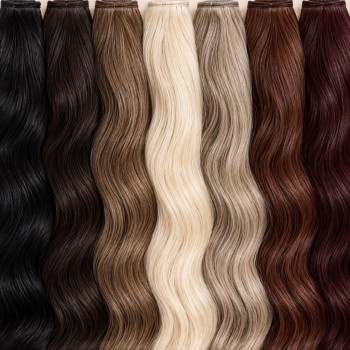
Choosing the right hair extension color is one of the most important steps toward beautiful, harmonious, natural-looking hair. Whether you want to add length, create more volume, or play with subtle pops of color, the right shade can make the whole look feel complete.
Sometimes, though, the choice isn’t so simple. Your hair may be a different color at the roots and the ends, blend several shades, or change tone depending on the light. And when you’re choosing extensions online, it gets even harder to judge.
At MyHAIR.BG, we know how important it is for extensions to blend seamlessly with your natural hair. That’s why we’ve put together this guide, to help you recognize the right shade and choose with confidence.
1. Compare the Color to Your Mid-Lengths and Ends
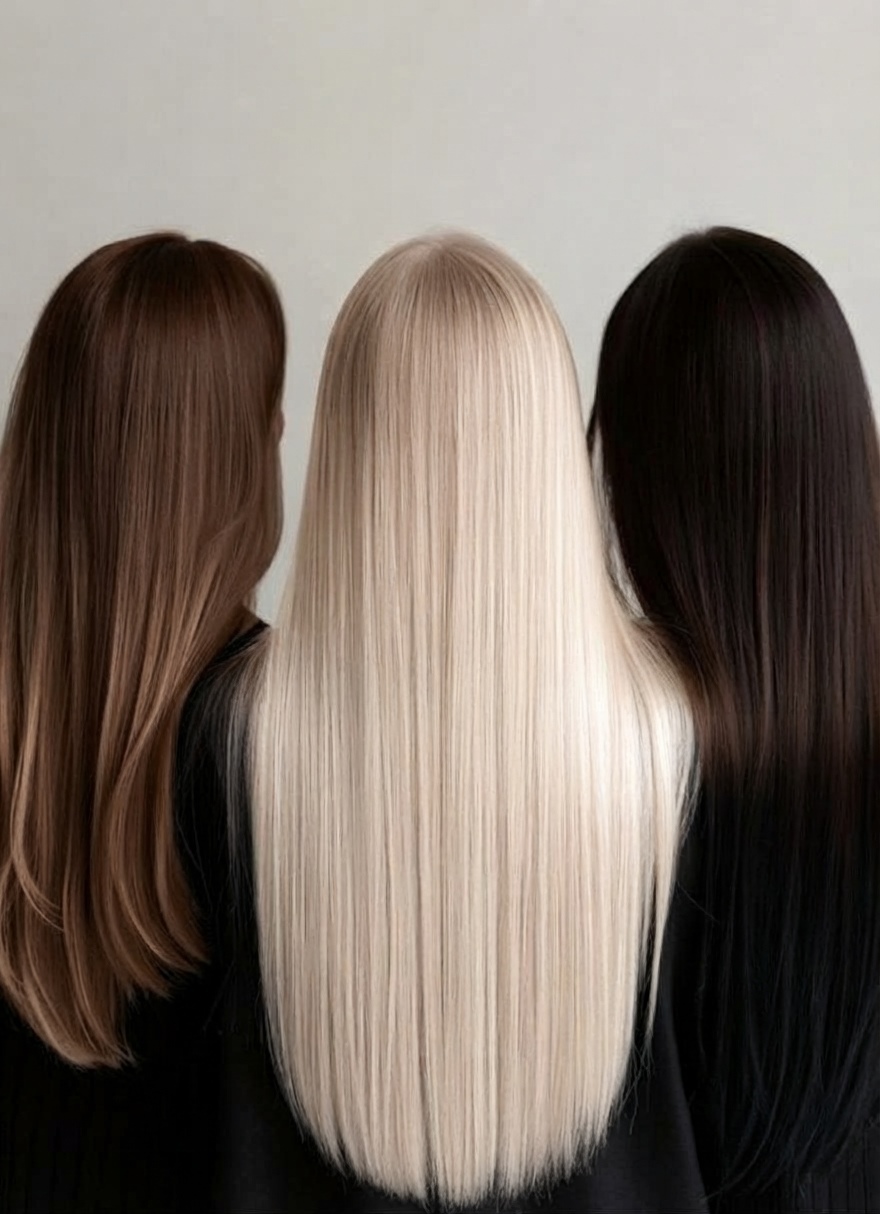
One of the most common mistakes when choosing extensions is matching only the color of the roots.
If your hair is naturally brown but your lengths have been lightened by the sun or dyed a lighter shade, extensions that match your roots may create a visible difference.
For a more natural result, pay attention to:
- Mid-lengths and ends: these matter most when you want the extensions to continue the natural line of your hair.
- The transition between colors: if your hair is darker at the roots and lighter toward the ends, look for a shade that blends well with the main color of your lengths.
- The overall color effect: consider how your hair looks as a whole, not just a single strand.
Your extensions don’t have to match every section of your natural hair perfectly. What matters is that the two colors complement each other and create a harmonious result.
2. How to Tell Warm, Cool, and Neutral Shades Apart
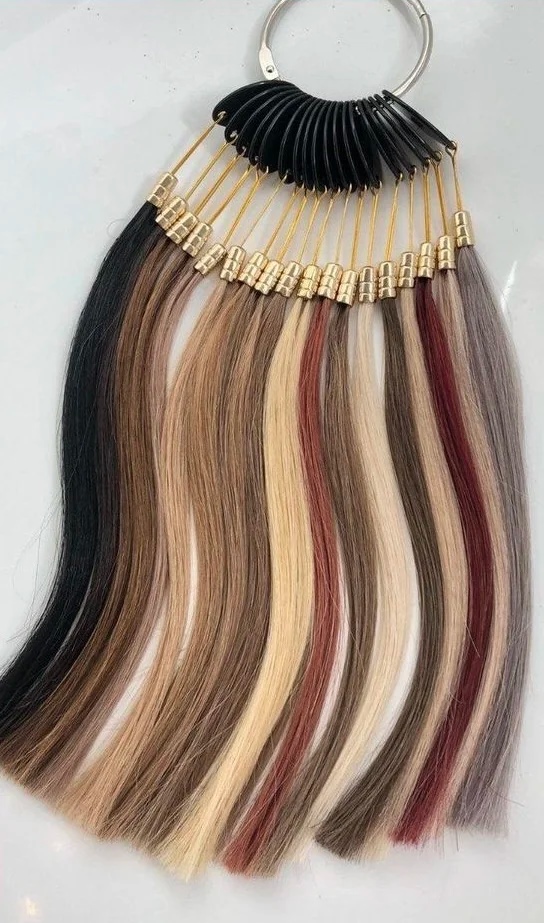
Even if two colors look equally dark or light, their undertones can be completely different. This is often what decides whether your extensions blend in naturally.
Warm shades
These have golden, copper, caramel, or reddish tones. They suit hair with similar warm reflections and can add softness and radiance to your look.
Cool shades
These are characterized by ash, gray-brown, or other cooler tones. If your hair is a cool blonde or ash brown, these shades can help create a more harmonious transition.
Neutral shades
These combine warm and cool characteristics, with neither undertone clearly dominating. This can make them a good choice for hair that isn’t distinctly warm or cool.
How to make a first assessment: look at your hair in natural daylight. If you see golden or copper reflections, your shade is probably warmer. If ash or gray-brown tones dominate, it’s probably cooler.
Keep in mind that hair color doesn’t always fall into just one category. It’s best to compare specific shades rather than rely only on their general names.
3. How to Choose Extensions for Dyed Hair, Balayage, or Highlights
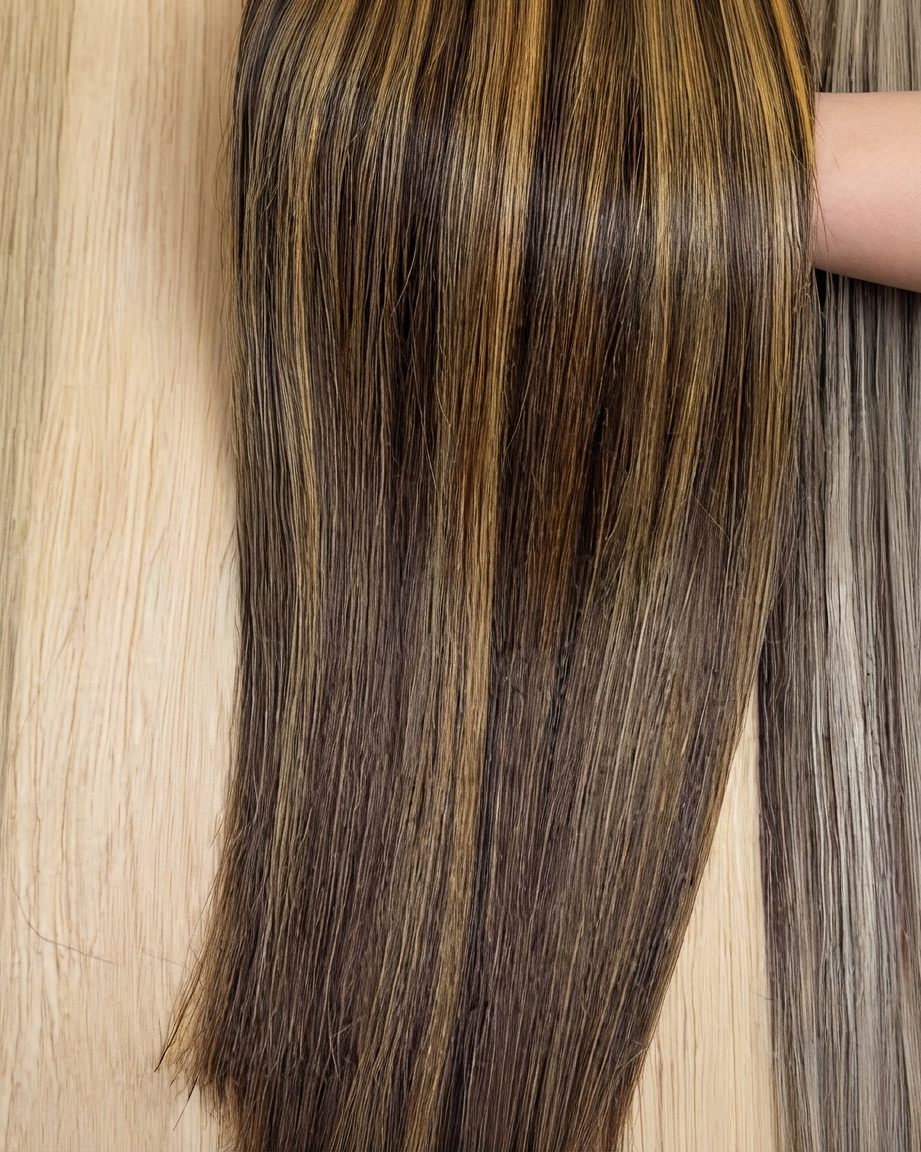
If your hair is dyed or has several colors, the choice takes a little more care. The good news is that you don’t need extensions that match every single strand.
For solid-colored hair
When your hair is fairly even from root to tip, choose extensions that come as close as possible to the color of your mid-lengths and ends.
For balayage or ombré
If your roots are darker and your lengths gradually lighten, base your choice on the color in the area where the extensions will blend with your natural hair. If there is a big difference between roots and ends, you may need a more specialized color solution.
For highlights
When your hair combines light and dark strands, you can choose a shade close to your base color, or use several different shades for a more multidimensional effect. The right combination can create the impression of more depth and natural fullness.
For red, copper, or non-standard blonde dyed hair
These colors can have specific undertones that general names like “blonde” or “brown” don’t always capture accurately. Compare the actual color, not just its name.
4. One Color or a Blend of Shades?
Not all hair is a single color, and not every natural look calls for a perfect one-color match.
Sometimes extensions in a single shade are all you need. In other cases, a blend of two close colors can create a softer, more natural effect.
For example:
- If your hair is dark brown with subtle lighter reflections, a blend of close brown shades can add more visual depth.
- If you have coppery blonde hair, a shade with the right golden or peachy reflections may blend better than an overly cool blonde.
- If your hair is dark and even from root to tip, a well-chosen dark shade can give you a beautiful, understated result.
Be careful not to overdo the contrast, unless you’re deliberately going for a bolder effect. The goal is for the extensions to complement your natural hair, not to look like a separate layer.
5. How to Choose the Right Color When Ordering Extensions Online
Shopping online is convenient, but there’s one catch: the color in a photo can look different from the real shade. This is due to lighting, screen settings, and the way a camera captures color.
To reduce the chance of a wrong choice, follow a few simple steps.
Photograph your hair in natural light. Avoid heavy filters, colored lamps, and direct sunlight, which can change how the shade looks.
Show your lengths and ends. A photo of just your roots isn’t enough, especially if your hair is dyed or has several tones.
Compare shades across several photos. If a product is shown from different angles and in different lighting, look at all the images to get a fuller idea.
Don’t rely only on the number or name of the color. Numbering and naming aren’t universal across manufacturers. Two colors both called “light brown,” for example, can have different undertones.
Ask for advice if you’re unsure. If you can’t decide which shade to pick, send clear photos of your hair in daylight and ask for help before ordering.
At MyHAIR.BG, you can browse our available colors and types of natural hair to find an option that fits your look and preferences.
6. Can You Dye Your Extensions If the Color Isn’t Quite Right?
Natural-hair extensions can react to dye, but that doesn’t mean every treatment is safe or that the result will be predictable.
Before making any change, keep the following in mind:
- Dyeing can affect the softness, shine, and condition of the hair.
- Lightening usually carries a higher risk of damage and isn’t recommended without professional assessment.
- What’s possible depends on the starting shade, previous treatments, and the characteristics of the particular hair.
- For some types of extensions, chemical treatment isn’t recommended.
If you’re torn between two colors, it’s better to find the right shade in the first place than to count on fixing it with dye later.
7. How to Achieve a Truly Natural Result
The right color matters, but it isn’t the only factor in a beautiful result. To make your extensions look natural, consider a few more things.
Choose the right length. The bigger the difference between your own hair length and the length of the extensions, the more important it is to blend the transition properly.
Consider the density. If your natural hair is fine, extensions that are too thick can make the difference more visible. Your choice should take into account both the volume you want and the natural structure of your hair.
Pay attention to texture. Straight, wavy, and curly hair blend differently. Choose a texture that matches yours or can easily be styled to match.
Think about the application method. Different methods have their own characteristics. Choosing between wefts, clip-ins, keratin bonds, or tape-ins depends on the result you want, your lifestyle, and the condition of your natural hair.
When color, length, density, and texture all work together, extensions can complement your natural hair much more harmoniously.
Find Your Color with MyHAIR.BG ❤️
Choosing extensions shouldn’t be hard or confusing. The most important thing is to know your own hair shade, pay attention to undertones, and not rely solely on a photo or a product name.
At MyHAIR.BG, you’ll find different types of natural hair, lengths, and colors to match your style and the result you want.
Explore our natural extensions (Indian Hair, Slavic Hair, Genius Weft) and choose the one that will add length, fullness, and a beautiful finish to your look.
And if you’re torn between several shades, ask for advice before ordering. Sometimes it’s the smallest difference in color that makes the biggest difference to your look!
Read our other blog posts to help you choose your extensions:
Write a comment